
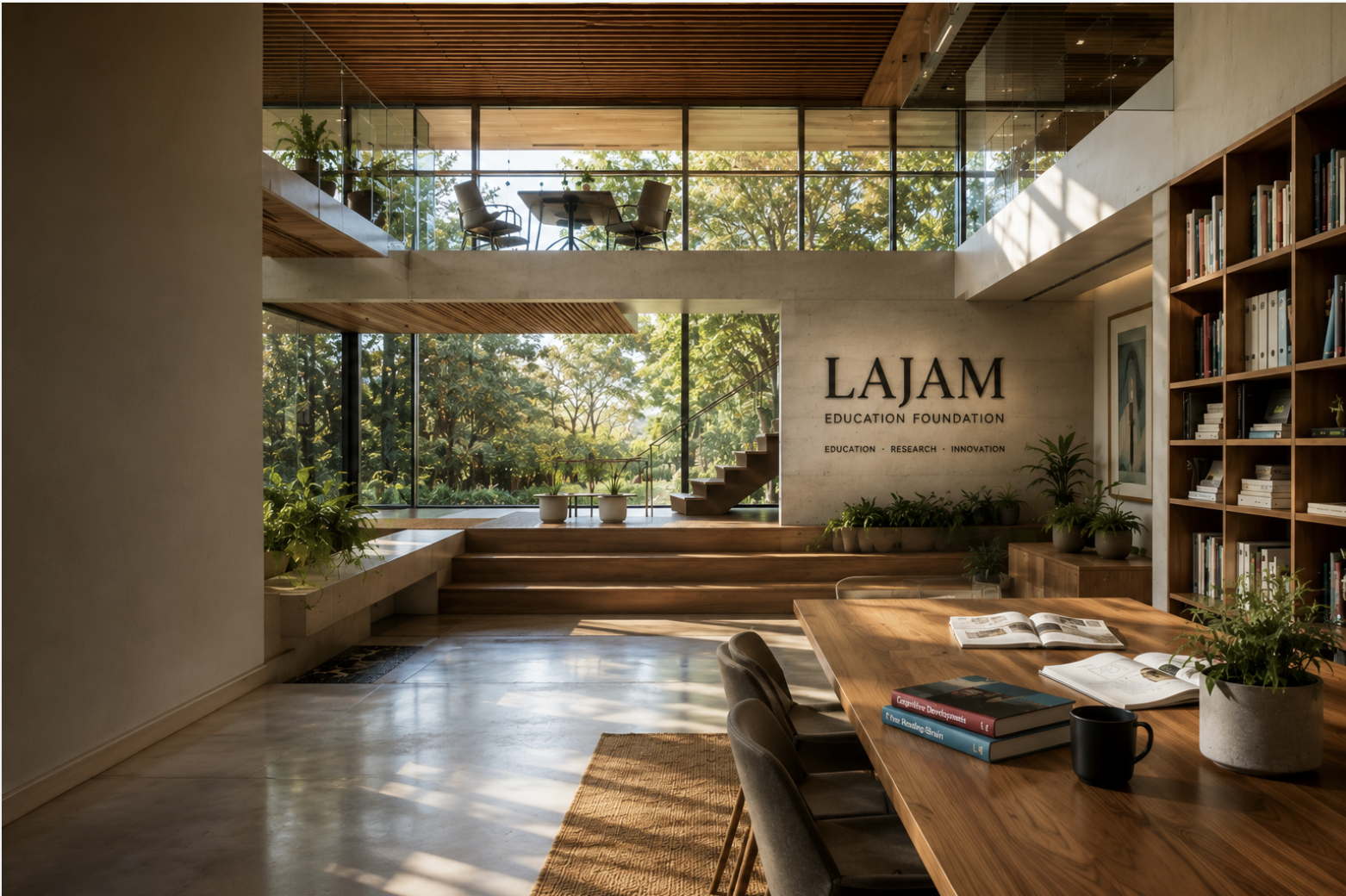
ABOUT LAJAM
Different disciplines.
One educational question.
EDUCATION · RESEARCH · INNOVATION
LEADERSHIP
Educational questions rarely belong to one discipline.
LAJAM brings together expertise across education, psychology, neuropsychology, educational leadership, research, law, technology, and communications.
That multidisciplinary structure reflects the nature of the work itself: understanding how learners develop—and how educational systems respond to them—rarely belongs to a single discipline.

OUR TEAM
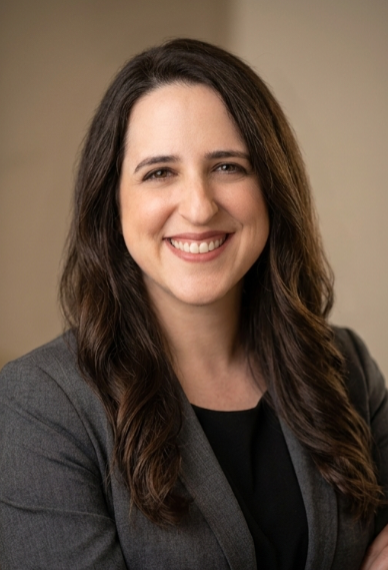
Laura Morales
FOUNDER & PRESIDENT
Clinical Neuropsychology · Bilingual & Special Education · Author
Clinical Neuropsychologist, bilingual educator and Special Education Specialist with over a decade of experience in Texas classrooms and International Schools. Master Teacher in Texas. Author of Don’t be a Master Teacher, Create a Master Classroom. Specialized in dyslexia and dyscalculia with advanced studies in Spain.
-
Her work sits at the intersection of literacy, bilingualism, neurodiversity, learning science, and educational systems.
After years in bilingual and special education classrooms, Laura pursued further study to better understand the cognitive mechanisms underlying learning and reading difficulties. Her training in Clinical Neuropsychology, together with advanced specialization in dyslexia and dyscalculia in Spain, expanded that work beyond classroom practice into the study of how language, cognition, and neurodevelopment interact with instruction.
Her professional experience includes teaching in Texas public schools and international education, curriculum and instructional design, bilingual literacy, special education, and professional learning. Her classroom work earned her Master Teacher recognition in the State of Texas.
She is the author of Don’t Be a Master Teacher, Create a Master Classroom, which examines the classroom as an interconnected learning system rather than a collection of isolated instructional practices.
As Founder and President of LAJAM Education Foundation, Laura leads the institution’s research and educational innovation agenda, with particular attention to how evidence from different disciplines can be translated into educational design for bilingual and neurodiverse learners.
Her work asks a central question: how can educational systems be designed around a more complete understanding of how learners actually learn?
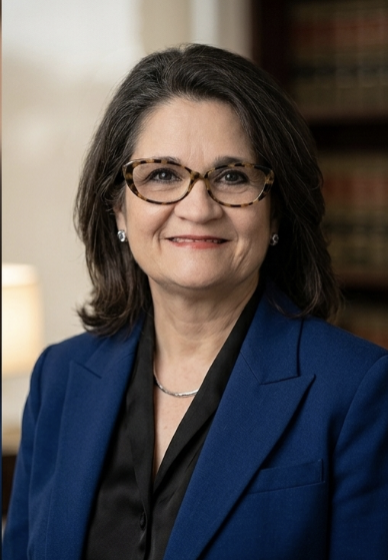
Sandra Mijares
VICE-PRESIDENT
Bilingual Education · Mathematics · Gifted Education
Bilingual educator with 30+ years of experience in education and leadership, including over a decade in Texas classrooms. Dual Language Lead Teacher, LPAC Chair, and Elementary Teacher of the Year at two campuses. Advanced degrees in Economics and Education. Passionate about equity and high expectations for all learners.
-
Sandra’s professional background brings together education, mathematics, bilingual learning, and leadership—a combination that allows her to examine educational challenges from both instructional and analytical perspectives.
With advanced degrees in Economics and Education, specializing in Mathematics, as well as certifications in bilingual education and gifted learning, she has worked extensively with multilingual learners across Texas classrooms.
Her leadership experience includes serving as a Dual Language Lead Teacher, LPAC Chairperson, and Grade-Level Team Leader. Across these roles, Sandra has worked at the intersection of classroom instruction and school systems, supporting decisions related to language development, academic expectations, and student access to rigorous learning.
At LAJAM, Sandra contributes this perspective to the institution’s work in bilingual education, instructional design, and educational innovation, helping ensure that research and design decisions remain grounded in the realities of schools and classrooms.
Her work reflects a central principle: bilingual learners should not have to choose between linguistic support and intellectual challenge.
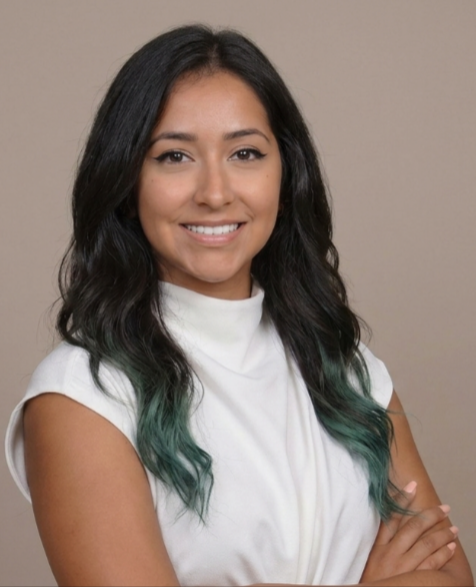
Brenda Albarrán
SECRETARY
Early Literacy · ESL · Science of Teaching Reading
Dedicated bilingual educator focused on early literacy and student success. Certified in Core Subjects EC–6, ESL, and the Science of Teaching Reading. Expert in TEKS-aligned instruction, small group teaching, data-driven planning, and technology integration.
-
Brenda’s work is grounded in the daily realities of early literacy, multilingual learning, and elementary instruction.
A Summa Cum Laude graduate of Texas Tech University with a B.S. in Multidisciplinary Studies, she holds certifications in Core Subjects EC–6, ESL, and the Science of Teaching Reading (STR). Her classroom practice combines research-based literacy instruction with data-informed planning and responsive support for individual learners.
Her experience includes designing TEKS-aligned instruction, leading small-group learning, integrating technology, and using student data to adjust instruction as learning develops. This gives Brenda a particularly valuable perspective on the point where educational frameworks must ultimately succeed: their implementation in real classrooms with real learners.
At LAJAM, Brenda contributes a practitioner’s lens to the institution’s work, helping connect research and educational design with the instructional decisions teachers make every day.
Her perspective keeps an essential question present: not only whether an approach is supported by evidence, but whether it can meaningfully work for the learners and educators it was designed to serve.
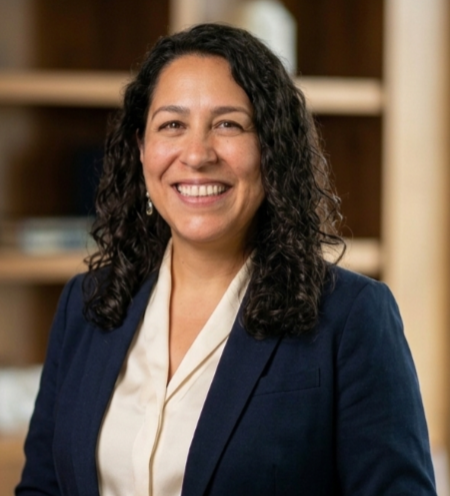
Claudia Morales
TREASURER
Educational Leadership · Bilingual Education · Engineering
Project Manager Civil engineer and educational leader. Bilingual educator certified in Texas with a Master’s in Educational Administration. Assistant principal and principal of a National Blue Ribbon School since 2019. Committed to inclusive school improvement, instructional excellence, and community engagement.
-
Claudia’s professional trajectory brings together two fields that rarely intersect: engineering and educational leadership.
She earned her Bachelor’s Degree in Civil Engineering and began her career leading infrastructure projects before transitioning into education in 2011. After becoming a certified bilingual educator in Texas, she moved from classroom teaching into school administration, earning a Master’s Degree in Educational Administration from Lamar University.
Her leadership experience includes serving as assistant principal and, since 2019, principal of a campus recognized as a National Blue Ribbon School under her leadership.
Her engineering background brings a distinctive systems perspective to education: understanding how individual components interact, identifying where structures break down, and designing processes that can function coherently over time.
At LAJAM, Claudia contributes expertise in educational leadership, organizational systems, bilingual education, and financial stewardship, helping connect educational innovation with the structures required to implement and sustain it.
Her perspective reinforces a critical principle: strong educational ideas require equally strong systems to make them possible.
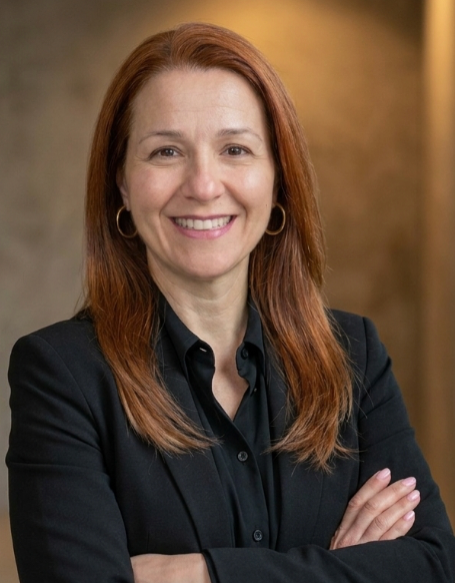
Mary Nieves Tamés
MEMBER AT LARGE
Clinical Psychology · Inclusion · Social Equity
Licensed psychologist with 15+ years in education, inclusion, and social programs. Expert in student support, mental health, and gender equity initiatives across Spain and Latin America. Also trained in frontend development and technology management, bringing a unique perspective to educational innovation.
-
Nieves brings to LAJAM more than 15 years of multidisciplinary experience across psychology, inclusive education, social intervention, and equity-focused programming in Spain and Latin America.
A licensed psychologist with a Master’s in Clinical Psychology, her career has included psychological evaluation, student support, disability advocacy, psychosocial counseling, and the design and coordination of programs serving children, young people, and marginalized communities.
Her work has also extended into gender equity and youth empowerment. She has contributed to national and international women’s networks, served as Vice President of Spain’s Federation of Young Women, and represented youth organizations in councils and public forums in Asturias.
Alongside her background in psychology and social inclusion, Nieves is trained in frontend development and technology management. This combination gives her an unusual perspective on how human needs, accessibility, and technology intersect in the design of educational solutions.
At LAJAM, she contributes expertise in psychology, inclusion, social equity, and digital accessibility, helping ensure that educational innovation considers not only how students learn, but also the broader conditions that shape their access and participation.
Her perspective brings an essential question to the work: who might an educational system unintentionally leave out—and how can we design differently from the beginning?
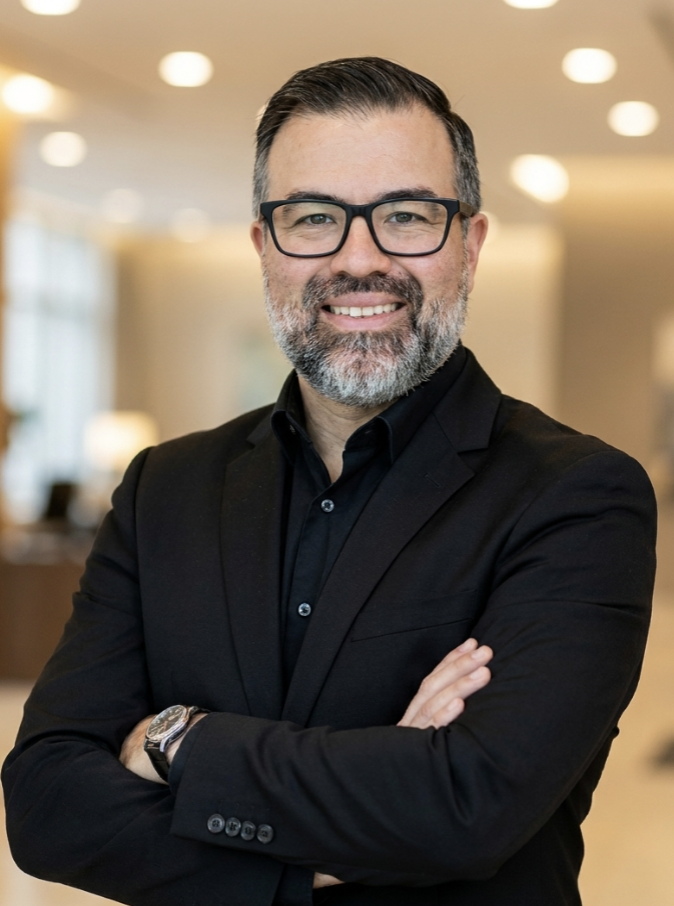
José Landino
DIRECTOR OF COMMUNICATIONS
Law · Strategy · Communications · Education
Attorney with a Doctor of Law (JD) and experience in education in the U.S. and Internationally. Expert in strategy, marketing, and communications. Combines analytical thinking with creativity to expand LAJAM’s impact and build meaningful partnerships that advance inclusive, bilingual literacy education.
-
José brings to LAJAM a multidisciplinary background spanning law, education, strategic planning, communications, and international experience.
Trained in law, with a Doctor of Law (JD) and licensed attorney qualification in Latin America, his professional experience has developed across different sectors and cultural contexts, including work connected to education in the United States and Italy.
His additional training in Managerial Leadership and Neuro-Linguistic Programming for effective negotiationscomplements his legal background with expertise in leadership, communication, strategic thinking, and relationship development.
At LAJAM, José focuses on the connection between the institution’s work and the audiences, organizations, and partners who can help extend its reach. His role includes communications strategy, institutional visibility, partnership development, and strategic growth, helping translate complex educational work into clear and meaningful communication.
His international and cross-sector perspective also contributes to LAJAM’s ability to think beyond a single educational system or geographic context as the institution develops its research, partnerships, and public presence.
His work addresses an important institutional question: how do strong educational ideas reach the people, partnerships, and systems that can turn them into broader impact?
BEFORE THERE WAS LAJAM,
There were students.
In 2022, I was teaching a first-grade classroom of eighteen students. Most were progressing as expected. They raised their hands, participated eagerly, and needed the kind of guidance teachers provide every day.
But three children were different.
Not because they lacked ability. Not because they were not trying. But because what I was seeing in front of me could not be adequately explained by the approaches, assessments, and interventions available to them.
For privacy, I call them María, Alejandra, and Luis.
Their stories changed the direction of my work and ultimately led to the creation of LAJAM and LUZ. This work honors them—and every student whose story has yet to be understood.
Laura Morales President and Founder
MARÍA
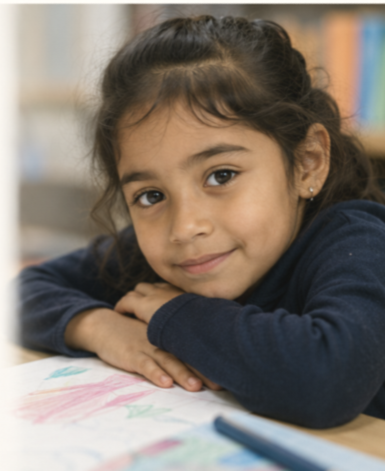
SHE HAD LEARNED HOW TO DISAPPEAR.
María never looked me in the eyes. When it was time to work on phonics or grammar, she would quietly raise her hand to go to the bathroom. Her eyes were usually down, her hands restless. But I noticed. I always noticed.
She was a little artist. Her drawings were beautiful and full of emotion.
I built trust, day by day. I told the class, “Her job is to learn. My job is to teach. And if something I say doesn’t make sense, it’s my responsibility to find a better way—her way.” I said it for her. And she listened.
We began tutoring after school. I asked her mom if I could stay with her after class. Her mother agreed. María came every day, in silence, but determined. She did every activity I asked. She practiced every sound. She wrote every word. And she began to improve.
-
I felt a knot in my stomach. María had heard every word.
I looked at her mother and said gently, “Please don’t call her that. She is incredibly intelligent. She works harder than anyone. The problem isn’t her—we simply haven’t found her way yet. But we will.”
The next day, I sat beside María.
“I don’t agree with what your mom said. You are intelligent, and we are going to prove it together. But I need you to trust me.”
She didn’t answer.
She cried and threw her arms around me.
She was six years old.
From that day forward, we became a team. We worked with sounds and syllables, breaking language apart and rebuilding it in a way that made sense to her. There was no prescribed programme. I was designing the approach as we went, responding to what María showed me she needed.
Weeks passed. María went from not reading to reaching Level 8.
Then, during a grammar lesson, she looked at me, smiled, and raised her hand.
She wanted to read.
For the first time, María read an entire sentence aloud in front of the class. Her classmates erupted in applause.
The child who had learned to disappear was choosing to be seen.
By the end of first grade, María had reached Level 20—the expected reading benchmark for her grade.
But the number was not what stayed with me.
María began finishing her work early. She asked for new words. She wrote stories. She read because she wanted to read.
She had not become a different child.
We had changed the way we taught her.
ALEJANDRA

THEY WERE LISTENING. BUT NOT IN HER LANGUAGE
Alejandra entered my classroom wrapped in the kind of silence that clings to a child like armor.
She had a visible speech difficulty that made it almost impossible to articulate complete words. Most adults couldn’t understand her. Most specialists couldn’t connect with her. But her classmates... somehow, they always knew what she was trying to say. Children have a beautiful, intuitive way of listening beyond words. They came close, translated her intention, and filled the spaces adults had already stopped trying to decipher.
I didn’t want her to feel different. So from the very beginning, I told the class a little secret: “You know? I’m a little hard of hearing.” So if I ever ask you to repeat something, it’s not your fault—I just need a little more help.” That secret gave her space. It gave her dignity.
-
At the time, Alejandra was receiving support from several specialists—in English.
But she did not speak English.
I began noticing something important. When I dictated slowly in Spanish, Alejandra could write surprisingly well. During independent writing, however, her words were almost unintelligible.
Her speech, her writing, her learning—everything was being interpreted through tools and approaches that did not reflect who she actually was.
So we changed the approach.
We began learning to read through writing. I broke words into syllables and we practiced again and again. At first, I spoke and she wrote. Slowly, carefully, she began connecting consonants and vowels into syllables.
Then we reversed it. I said a word. She repeated it slowly and intentionally, working through the sounds, and wrote it one syllable at a time.
Week by week, something changed.
She gained speed. Confidence. Oral fluency.
Syllables became words. Words became sentences. And those sentences increasingly made sense—to her, to me, and to the people around her.
By the end of the school year, Alejandra had gone from not reading to reaching Level 18. Some speech sounds remained difficult for her, but what she was capable of learning was no longer in question.
Then came a meeting I have never forgotten.
During Alejandra’s annual IEP meeting, a specialist was considering recommending placement in a specialized setting for students with significant special-education and cognitive needs. The concern was that Alejandra could not answer simple questions, identify important information in a text, or speak clearly about herself.
I was stunned.
Alejandra could do those things.
She could do them in the language she spoke.
None of the professionals evaluating her spoke Spanish.
The people around that table were trying to make the best decision they could with the training and information available to them. But the system was interpreting Alejandra’s performance without adequately separating language, speech, and learning.
Her mother was terrified.
When I explained what Alejandra was doing in our classroom and how far she had progressed, her eyes filled with tears.
She looked at me and said:
“Gracias, maestra.”
Alejandra taught me something I would carry far beyond that classroom:
Before we decide what a child cannot do, we have to make sure we have given them a way to show us what they can do.
LUIS
HIS DIFFICULTY WAS VISIBLE. SO WAS HIS BRILLIANCE.
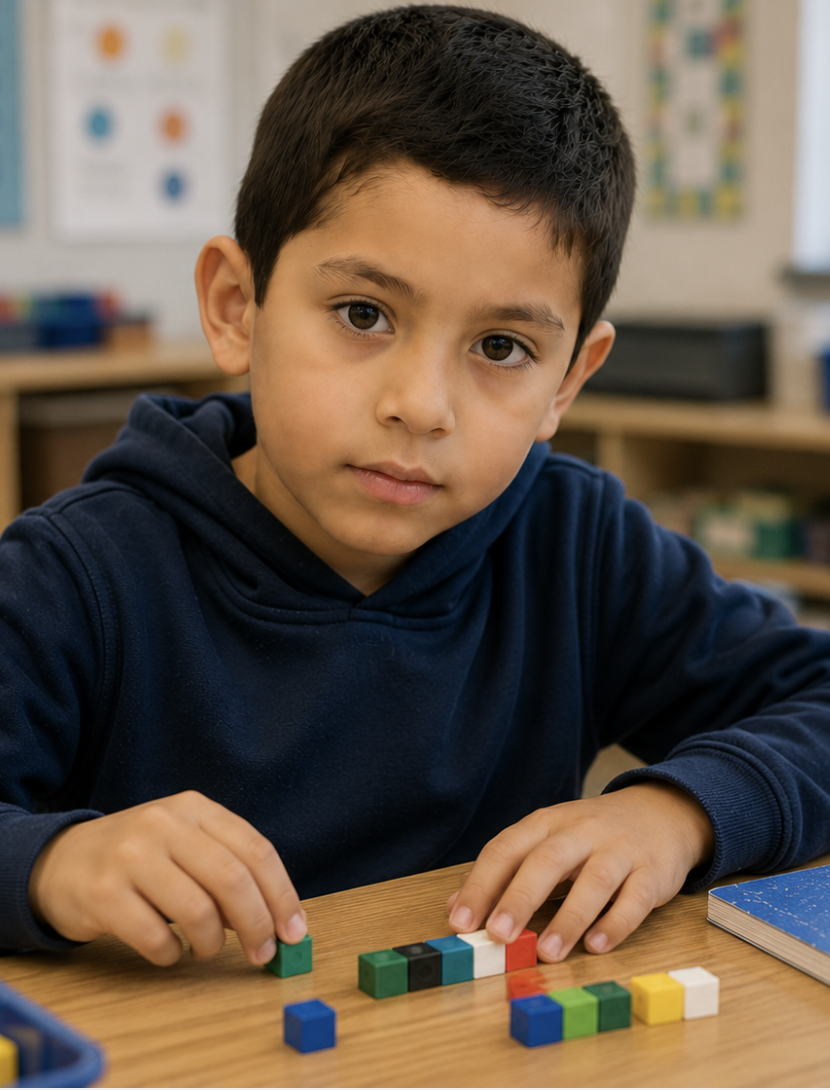
Luis barely spoke. Not because he didn’t want to, but because speaking itself was difficult. His words came in fragments—sometimes understandable, sometimes not at all.
Writing was even harder. When given lined paper, he drew circles, lines, and spirals across the page, erased them, and began again. He did not follow the lines or attempt to form letters. Letters, syllables, phonics—he closed every one of those doors.
But he loved mathematics.
He didn’t simply enjoy it. He excelled at it.
Luis could calculate mentally with remarkable speed. His number sense was strong, and during problem-solving activities, his hand was often in the air before I had finished reading the question.
Mathematics gave him confidence. Language had taken it away.
I tried everything that had worked with other students. Eventually, we had to return to the very beginning: forming a line, creating a curve, making a circle intentionally.
Even writing his own name was a challenge.
-
I designed an intervention plan that returned to the very beginning: how to trace a line, form a curve, make a circle with intention.
We had to deconstruct and rebuild his understanding of symbols.
I sat down with his mother and showed her exactly what I was doing. I explained the sequence, the reasoning behind it, and how we would work together. I organized everything in a folder, step by step. She committed to working with him at home while I supported him at school.
Slowly, Luis began to connect letters in the way he had always connected numbers.
The progress was not fast.
But it came.
By the end of the school year, Luis could write within the lines. He could form recognizable letters and write simple sentences. And he had gone from not reading to reaching Level 8.
He had not reached the official first-grade reading benchmark.
But knowing where he had started, what he had accomplished was extraordinary.
Then came another meeting with specialists.
There was disagreement about whether Luis should even be evaluated for dyslexia. Because he could understand a text, some believed that comprehension was incompatible with dyslexia.
I stopped and began asking questions.
Luis was seven years old, in first grade, and had begun the year unable to write his full name. Yet his comprehension and mathematical thinking revealed clear cognitive strengths.
I began bringing what I was learning into the conversation: the different ways dyslexia can present, how its manifestations can differ across languages, and why strong comprehension does not rule out difficulty with decoding.
But the meeting exposed something larger.
Many educators and specialists are trained within monolingual frameworks. The professionals working with Luis were doing the best they could with the preparation they had received—but the tools and frameworks available to them did not adequately account for how reading difficulties may present in Spanish-speaking and bilingual learners.
That meeting became a turning point for me.
Luis had made the gap impossible to ignore.
His difficulty was real. His intelligence was equally real. Yet the frameworks available to understand one did not adequately explain the other.
I realized that the questions I was asking had moved beyond what I could answer through classroom experience alone.
I needed to understand why.
THE QUESTIONS CONTINUE.
The experiences of learners like María, Alejandra, and Luis continue to shape the questions LAJAM investigates today.
LITERACY • BILINGUALISM • NEURODIVERSITY • LEARNING SCIENCE • EDUCATIONAL DESIGN