
LUZ
NEURODIDACTIC FRAMEWORK FOR EARLY SPANISH LITERACY.
Authentic Spanish Literacy.
Designed from the language itself.
LUZ is an inclusive literacy framework that integrates the linguistic structure of Spanish, learning science and neurodidactic designing one coherent, instructional system
CLOSING THE GAP
Some children learn to hide before they learn to read.
There’s a look some children carry in their eyes—a quiet kind of hiding. You don’t notice it at first. But once you’ve seen it, you never forget. -
Laura Morales


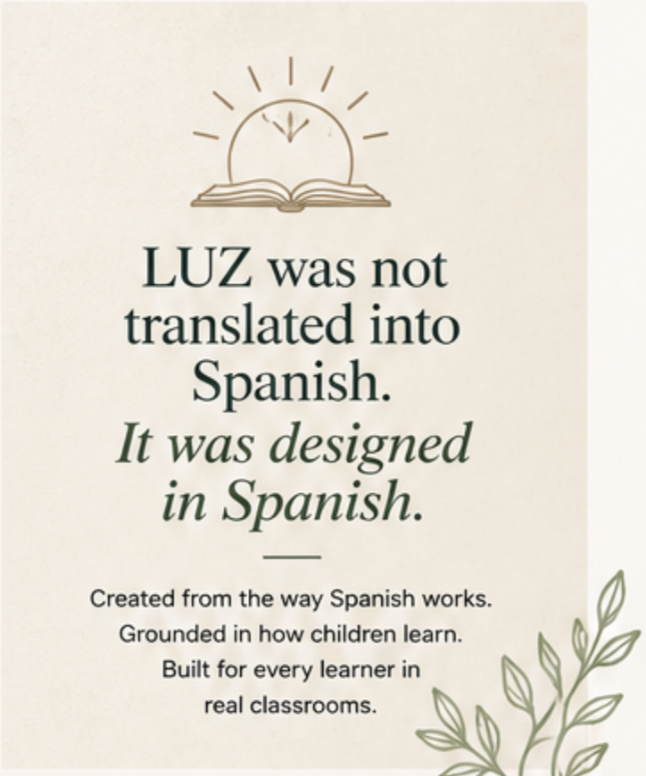
Spanish-speaking and bilingual learners with reading difficulties are too often supported through instructional and intervention models developed primarily for English.
The consequences are significant:

Instructional mismatch
Many Spanish literacy interventions are adapted from English rather than designed around the linguistic and orthographic structure of Spanish.

Delayed or misaligned support
Bilingual learners may be identified late, receive interventions that do not match their language profile, or be removed from classroom instruction to receive additional support.

Teachers without the right tools
Classroom educators need practical approaches that allow them to respond to reading difficulties early, within everyday literacy instruction.

Specialists entering too late
Specialised support is essential, but it often begins only after a learner has already experienced persistent difficulty.
LUZ began with a different question.

What would early literacy instruction look like if it were designed from the beginning for Spanish—and for the diversity of learners actually sitting in our classrooms?
WHAT IS LUZ?
A complete literacy framework for children ages 5-7
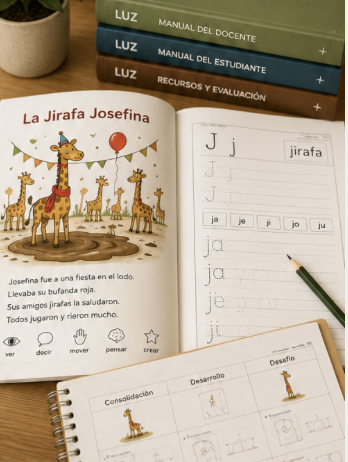
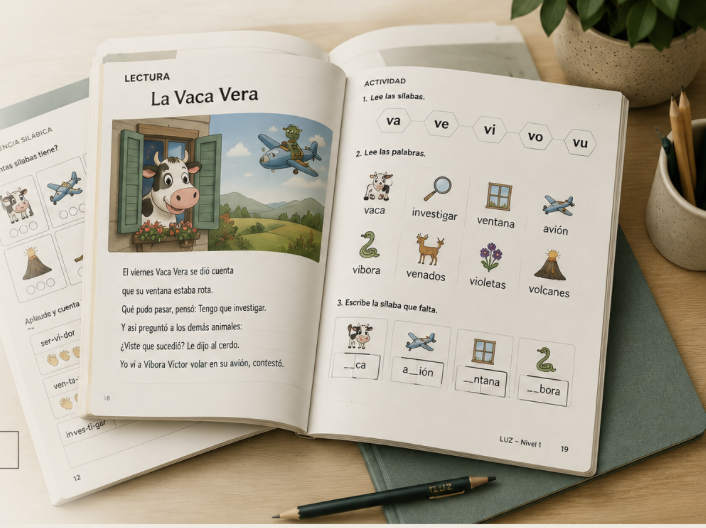
LUZ is a neurodidactic literacy programme for Spanish-speaking learner in Kindergarten through Grade 1.
Built specifically for the structure of Spanish, LUZ combines phonological instruction, structured literacy, multi sensory learning, cognitive science, and inclusive practices into one coherent instructional framework.
Support for reading difficulties is not something added later. LUZ embeds dyslexia informed and neurodiversity responsive strategies into everyday instruction from the very beginning.

WHAT LUZ INCLUDES

A SYSTEMIC LITERACY FRAMEWORK
Skills develop through a clear and intentional sequence based on Spanish phonology, syllabic structure, orthographic patterns, vocabulary, fluency, and comprehension.

A CONSISTENT NEURODIDACTIC ARCHITECTURE
Lesson follow a predictable learning cycle: ver - decir - mover - pensar - crear. Integrating visual, auditory, motor, linguistic, and cognitive processes.

DIFFERENTIATION WITHIN CORE INSTRUCTION
Shared learning objectives are supported through different levels of complexity, structured practice, and multiple pathways for participation and response.

COMPLETE TEACHER AND STUDENT SYSTEM
Student materials, teacher guidance, instructional routines differentiated practice, assessment, and implementation support are designed as parts of the same framework.
THE LUZ FRAMEWORK
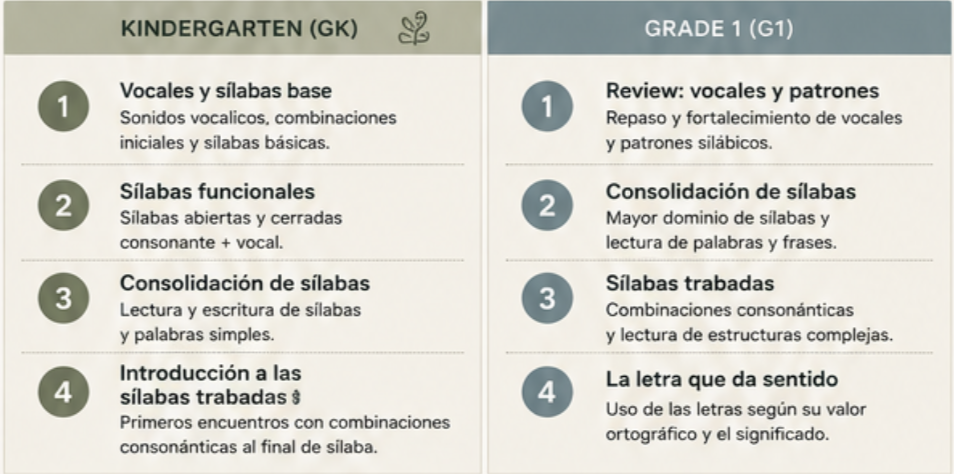
Two years. Eight blocks. One intentional literacy progression.
LUZ is organised across Kindergarten and Grade 1. Each block builds on the previous one, guiding children from foundational skills to confident, meaningful reading and writing in Spanish.
From explicit instruction to independent reading and writing.
INSIDE EACH BLOCK
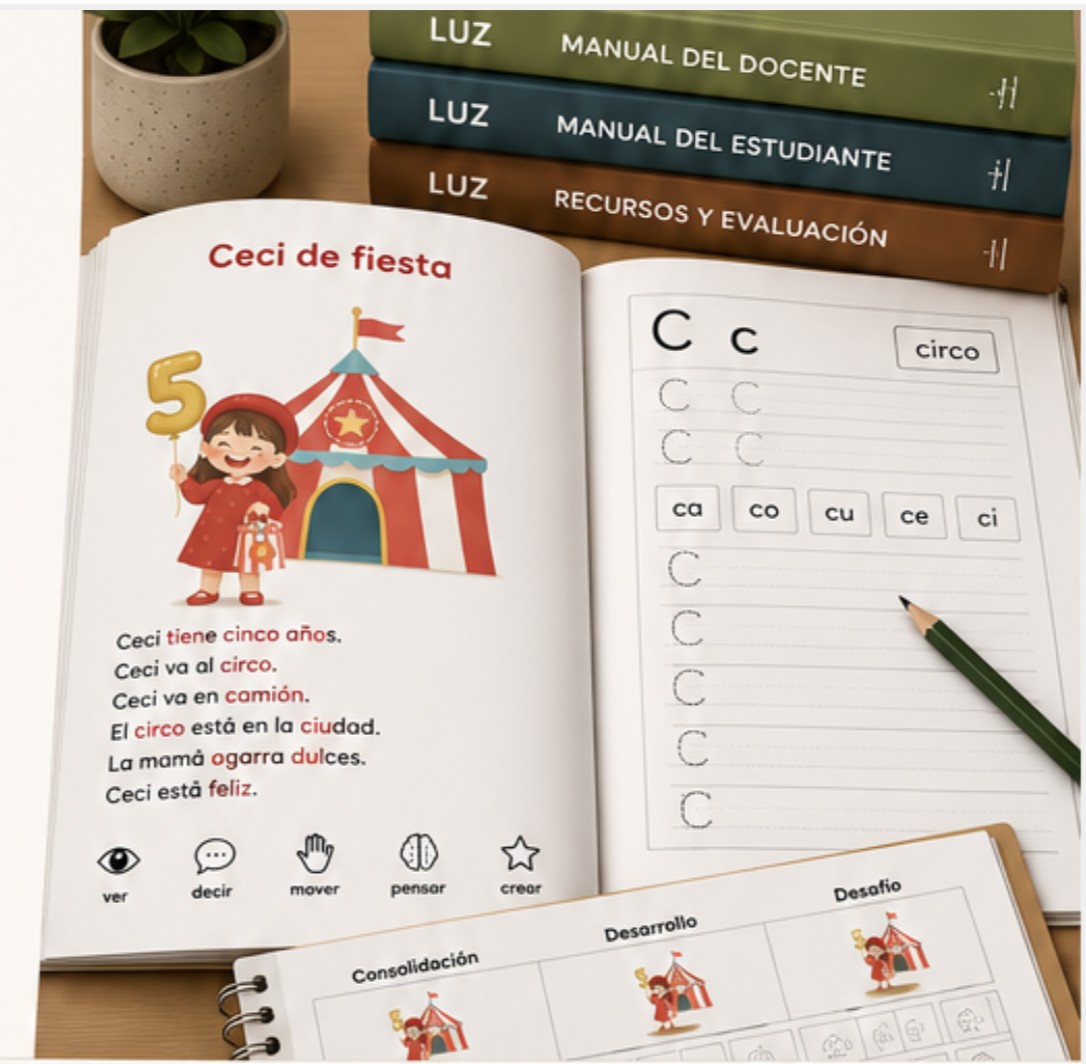
Every LUZ block integrates instruction, practice, differentiated application, and decodable reading so students build skills, use them in context, and express what they understand.

New letters, sounds, syllables, and orthographic patterns are introduced explicitly and reinforced through visual, auditory, oral, motor, reading, and writing experiences.
Previously learned skills return across the block through cumulative practice, word reading, sentence work, fluency, and retrieval activities.

Activities provide three levels of complexity—Consolidación, Desarrollo and Desafío—so students can work toward the same learning objective with different support.

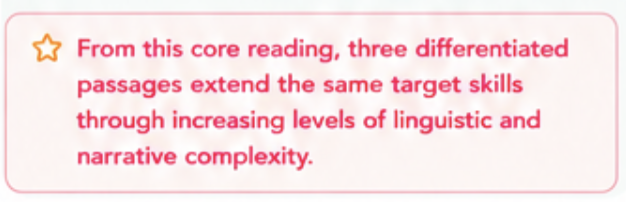
Three levels of decodable reading let students apply the same target skills with increasing linguistic and narrative complexity.

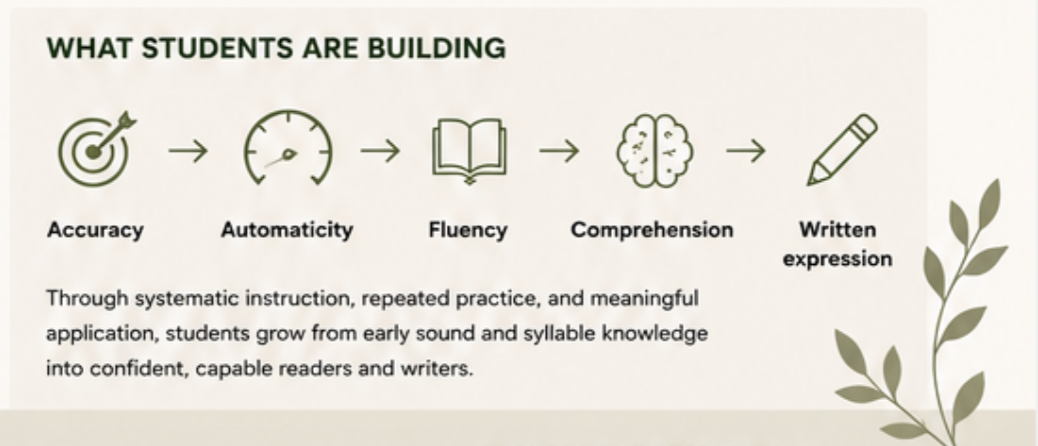
Decodable reading is not an endpoint. Students use the language and patterns they read to strengthen spelling, sentence construction, written expression, and comprehension.
THREE DECODABLE READING PASSAGE IN PROGRESSION
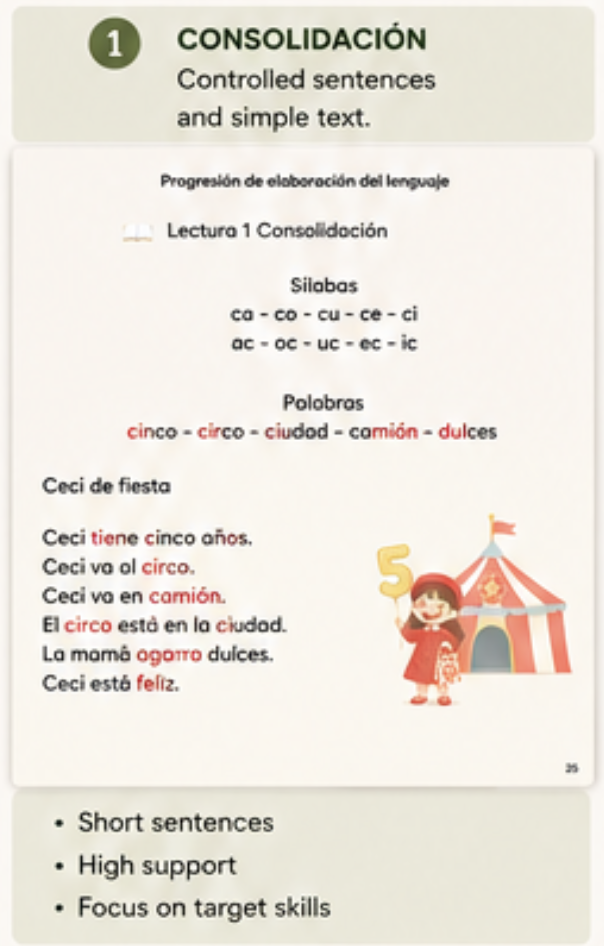
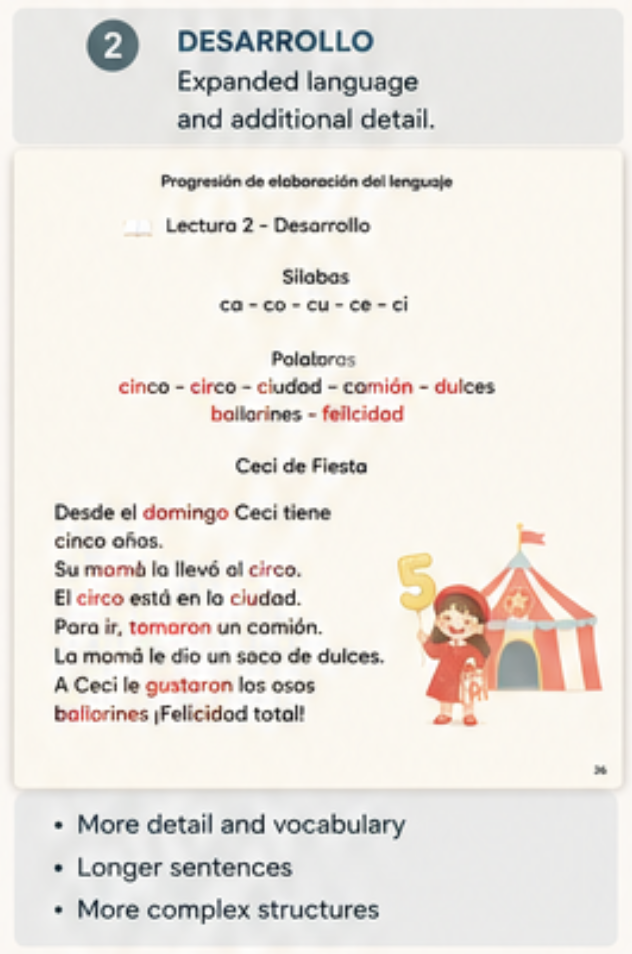
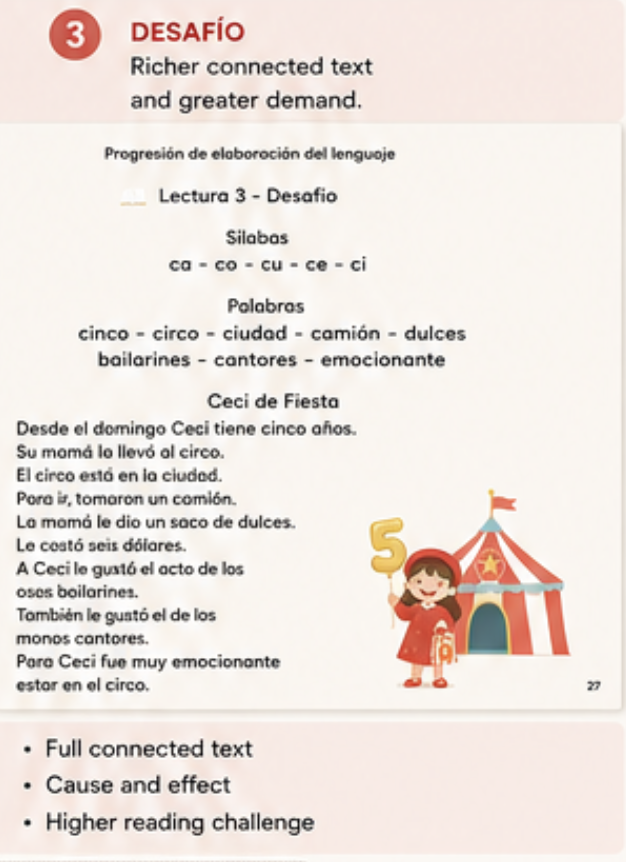
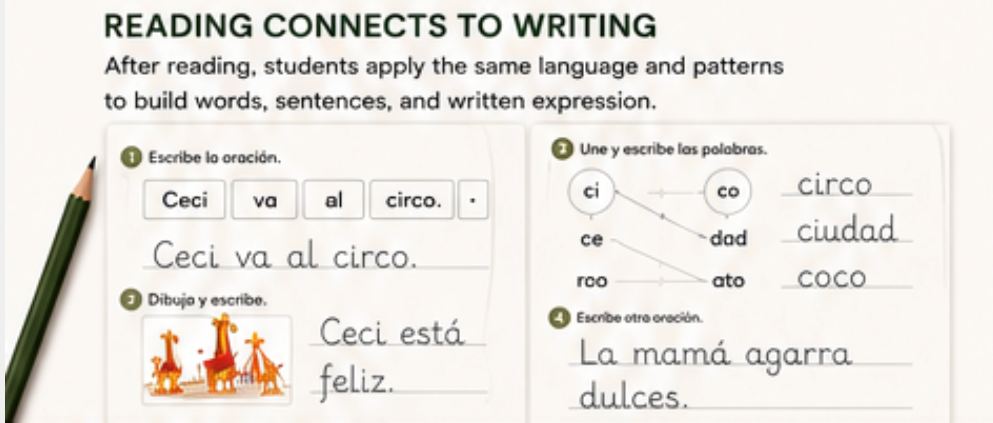
All 3 texts are 100% decodable with the phonics and orthographic knowledge taught in the block

The Research behind LUZ
Our design is grounded in cognitive science, linguistics, and evidence-based practice.

INSIDE A LUZ LESSON
One pattern. Multiple pathways.
Reading and writing connected from beginning to end
In this Grade 1 lesson, students learn the letter G and the syllables ga, gue, gui, go, gu. Through explicit instruction, multisensory practice and a memorable story, they build the skills to read and write with confidence.
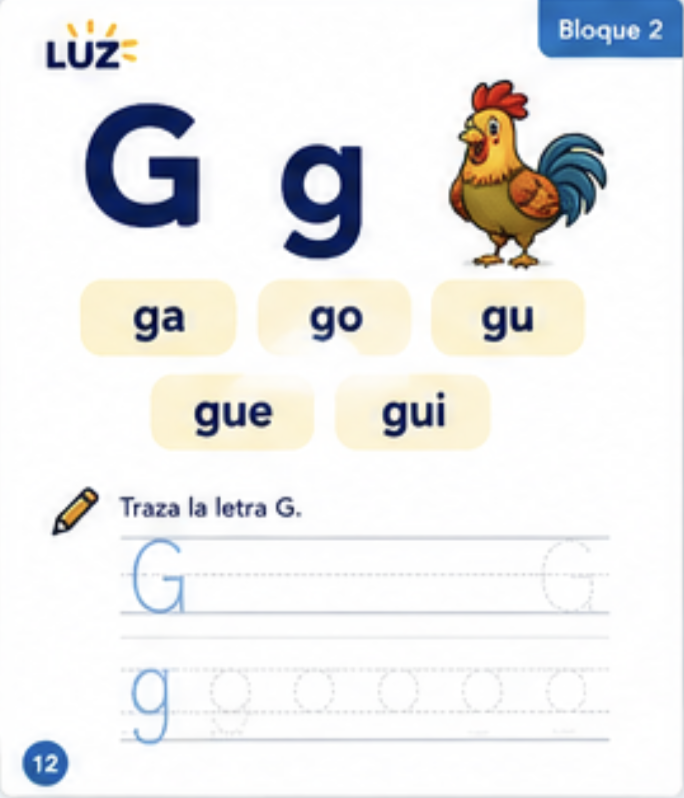

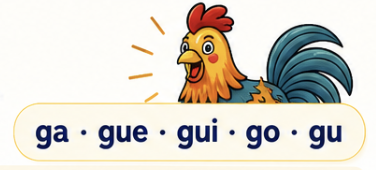
Students are introduced to the letter G and its syllables. They see the pattern, say the sounds and trace the letter, connecting visual, auditory and motor pathways.
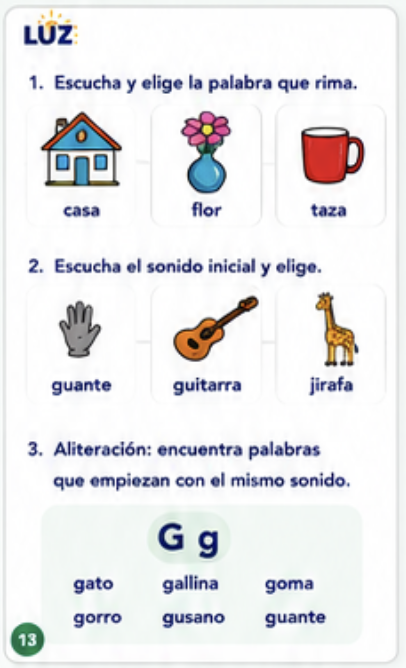

Students learn to hear before they are expected to read automatically. Auditory discrimination, rhyme and alliteration are embedded throughout LUZ to strengthen sensitivity to the sound structure of Spanish.
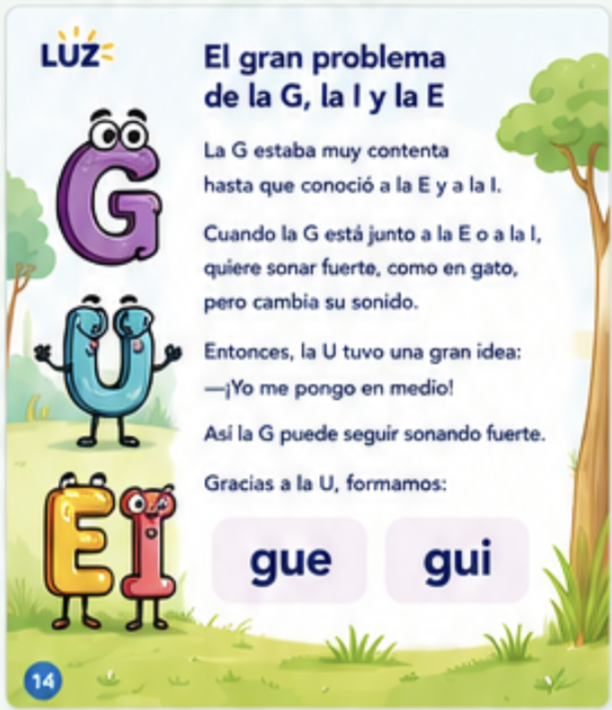

A short, memorable story explains why we use U in gue and gui. Stories in LUZ anchor exceptional patterns in meaning, so students remember them when they read and write.
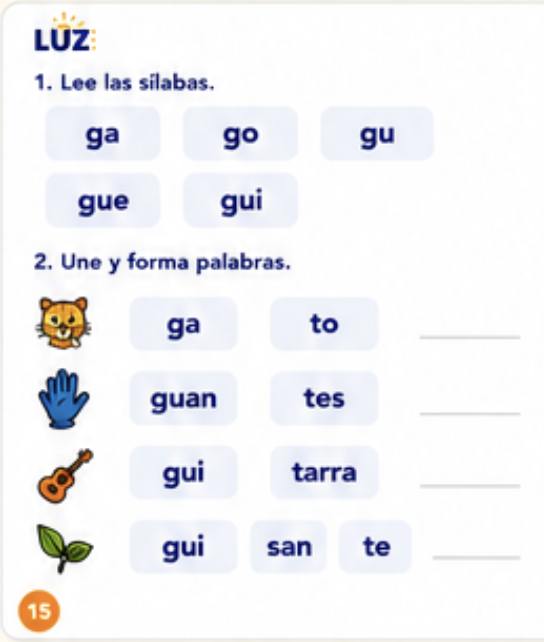

Students read syllables, blend them into words and match with images. They discriminate sounds and build words using the new pattern.
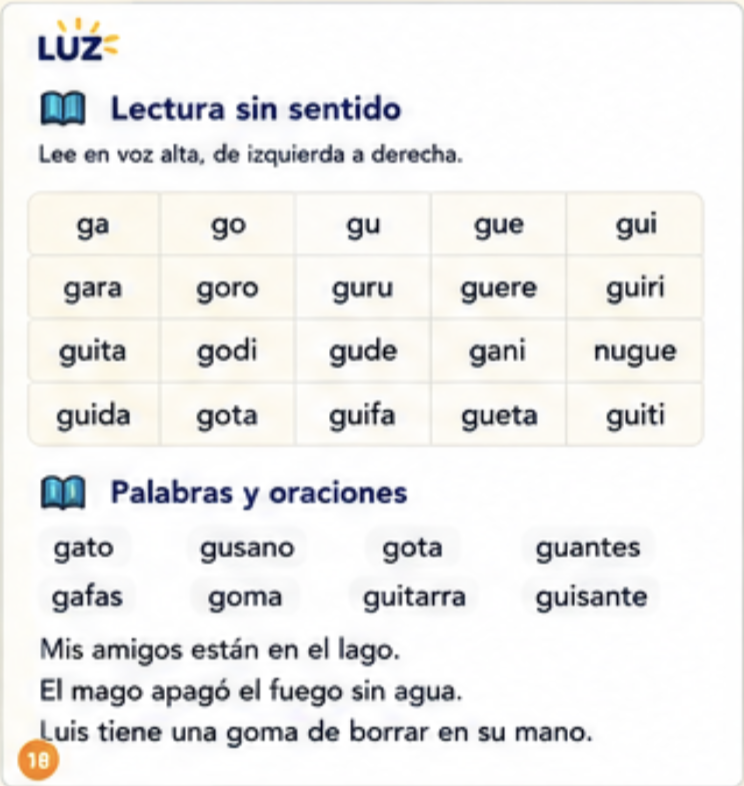

Through repeated and structured reading, students develop fluency, rhythm and automaticity — essential for confident and effortless reading.
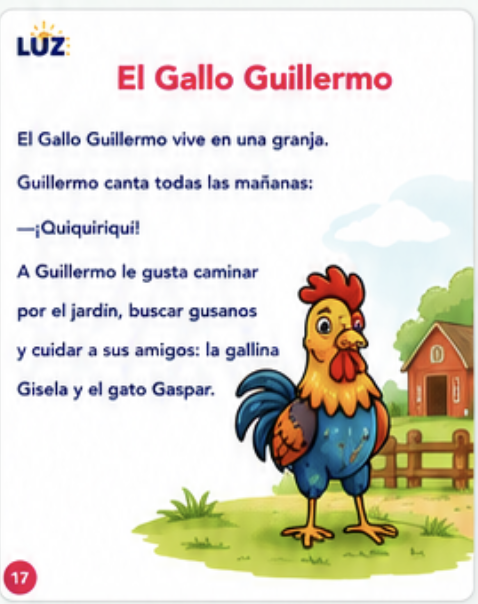

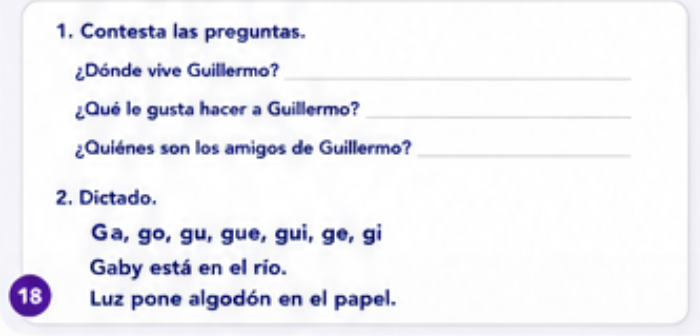


Students answer comprehension questions and complete a dictation, retrieving the pattern in their own writing

In LUZ, stories do more than practise reading.
They give unfamiliar and exceptional patterns a meaningful context students can retrieve when they read and write.

Curriculum Preview Notice: Materials shown are representative visualizations of the LUZ instructional framework and may differ from the final curriculum. Complete lessons, stories, activities, and instructional materials are not reproduced and remain protected by copyright.
FROM CURRICULUM TO CLASSROOM
DESIGNED FOR THE TEACHER
Everything they need in one place
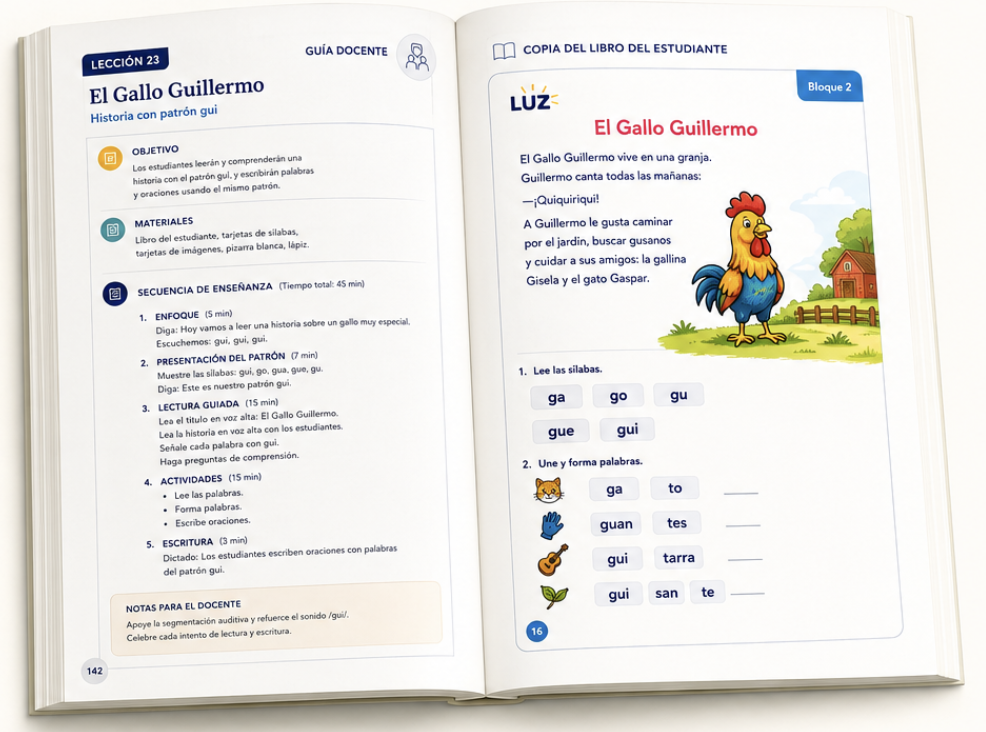
The LUZ Teacher Manual brings the complete instructional sequence into one book, including teacher guidance and a copy of the corresponding student-facing materials.
Teachers do not need to move between multiple resources to understand what comes next, what students are seeing, or how each activity should be implemented. The structure is intentionally streamlined to reduce unnecessary cognitive load and keep attention on instruction.
SCRIPTED WHEN SUPPORT IS NEEDED.
FLEXIBLE WHEN IT ISN’T.
Every lesson includes a complete instructional script.

For new teachers, the script provides the language, sequence and guidance needed to implement LUZ with fidelity.

Experienced teachers can use the same lesson architecture without being constrained by the script—drawing on the guidance where useful while integrating their own established instructional practice.

The goal is not to script the teacher.
It is to make the instructional reasoning visible enough that no teacher has to guess what to do next.

BRING LUZ INTO THE CLASSROOM
Interested in exploring LUZ with your school or district?
LUZ is currently moving through development, validation, and preparation for classroom implementation.
We welcome conversations with schools, districts, researchers, and philanthropic partners interested in supporting or participating in the next stage of the work.
RESEARCH
PILOT IMPLEMENTATION
DISTRICT PARTNERSHIP
PHILANTROPIC SUPPORT