Research That Becomes Educational Innovation
Most Educational Research ends with publication. Ours continues into design.
LAJAM investigates educational questions, translates evidence into
instructional frameworks, validates them in classrooms, and
documents the reasoning behind every decision so educational
innovation can be understood, improved, and shared.
EVIDENCE-INFORMED
NEURODIDACTIC
INCLUSIVE BY DESIGN
TRANSPARENT

LAJAM RESEARCH PHILOSOPHY
We do not conduct research to publish
papers. We conduct research to
understand how educational innovation
is created.
How Educational Innovation Is Created

Educational Innovation does not happen by accident.
At LAJAM, every research programme follows a rigorous and transparent methodology. We move from meaningful questions to evidence-informed design, test our frameworks in real classrooms, refine them through validation, and openly document every decision so knowledge can be understood, trusted, and built upon.
This is how research becomes educational innovation

Every programme begins with a meaningful educational question- not a predetermined solution.

QUESTION

EVIDENCE
Research is integrated across neuroscience, literacy, bilingual education, learning sciences, linguistics , and instructional design.


DESIGN
Evidence is translated into practical educational frameworks that can be implemented in classrooms.

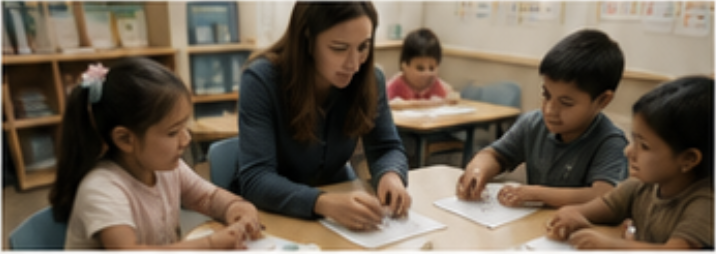
PILOT
Frameworks are implemented in authentic educational environments to understand how they function in practice.


VALIDATE
Implementation, educator experience, and student learning are examined to refine and strengthen the framework.

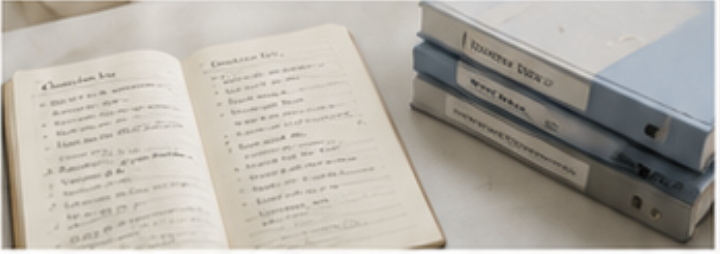
Institutional reasoning, decisions, revisions, and lessons learned are recorded throughout the process.

DOCUMENT
Educational knowledge is disseminated through publications, frameworks, decision logs, and professional learning so others can learn, adapt, and build upon our work.

SHARE
Why This Process Matters

Educational Innovation should be transparent. By documenting each stage of development, LAJAM
makes it possible for educators, researchers, schools, and partners to understand not only what was
created, but why each decision was made.
Research becomes more valuable when its reasoning is visible.
Active Research Portfolio
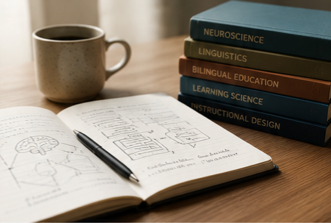
INVESTIGATING HOW LEARNING CAN BE BETTER DESIGNED
Every research programme begins with a question.
At LAJAM, educational innovation is not organised around products or services. It is organised around questions that require sustained investigation. Each programme explores a distinct educational challenge through interdisciplinary research, with the goal of developing frameworks that can eventually inform classroom practice.
Our portfolio is designed to grow over time. Each programme contributes to a broader research agenda focused on literacy, learning, language, and educational design.
RESEARCH PROGRAMME 01
LUZ
Neurodidactic Framework for Early Spanish Literacy
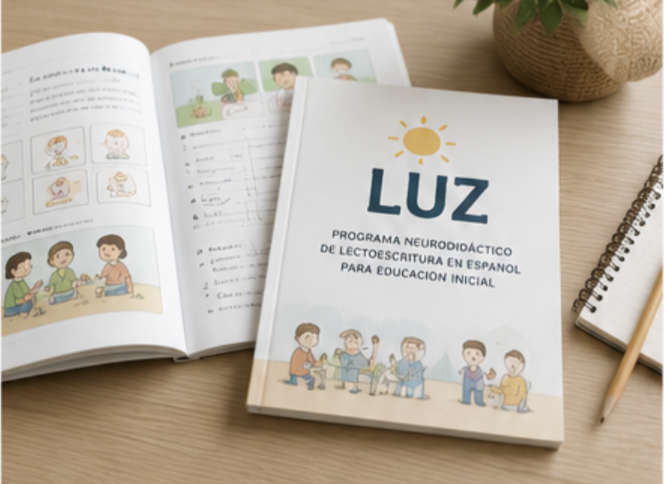
LUZ investigates how early Spanishliteracy can be designed from the structure of the language itself rather than adapted from instructional models developed for other orthographies.
Drawing on cognitive neuroscience, linguistics, bilingual education, learning sciences, and instructional design, the programme seeks to translate research into a coherent instructional framework that supports every learner.
CURRENT STAGE
Framework Development and Expert Validation
RESEARCH PROGRAMME 02
The Reading Brain
Toward a Layered Model of Reading Across Languages and Neurodevelopment
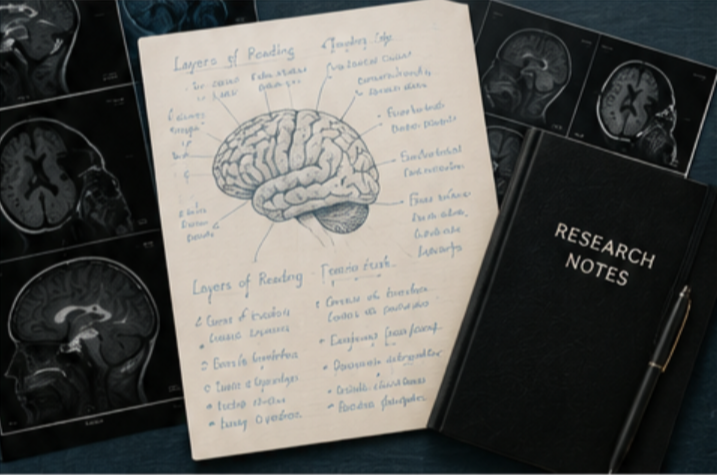
This research programme examines how reading emerges through the intersection of universal neurobiology, language specific writing systems, bilingual experience, and neurodevelopment.
Rather than treating as a single universal process, the project explores a layered model that may better explain how literacy develops across languages and learner profiles.
CURRENT STAGE
Working paper in Development.
OUR LINES OF RESEARCH
Research that impacts

LAJAM's research is organised around a set of interconnected areas that guide our programmes, publications, partnerships, and educational innovation to investigate how learning can be better understood, designed, and implemented.
Literacy & Reading Development
Bilingual Education & Biliteracy
Neuroscience & Learning
Instructional Design & Neurodidactics
Teacher Learning & Professional Practice
Educational Innovation & Systems Design
From Research to Educational Innovation


Research does not become educational innovation automatically.
It must be intentionally transformed.
At LAJAM evidence is transformed through three essential shifts that move from scientific understanding to educational reasoning to classroom experience.
TRANSFORMATION I
Research
Educational Principles
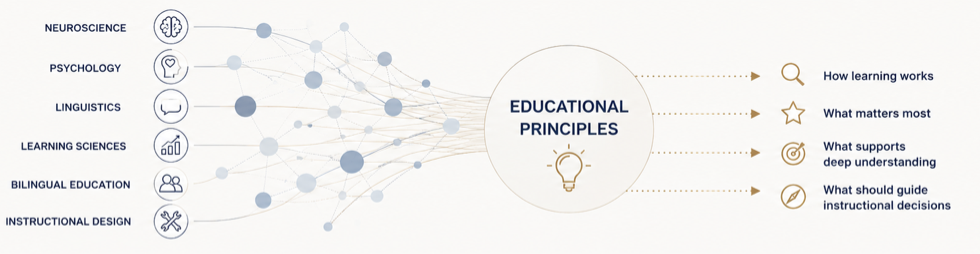
Research helps us understand learning. Educational principles explain what that understanding means for teaching.
TRANSFORMATION II
Educational Principles
Instructional Frameworks
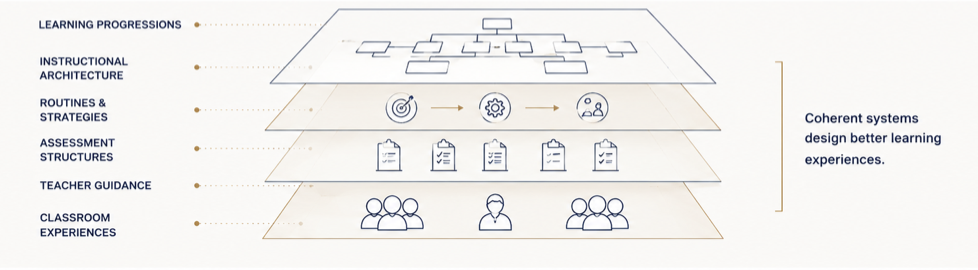
Educational Principles become coherent systems rather than isolated activities.
TRANSFORMATION III
Instructional Frameworks
Educational Innovation
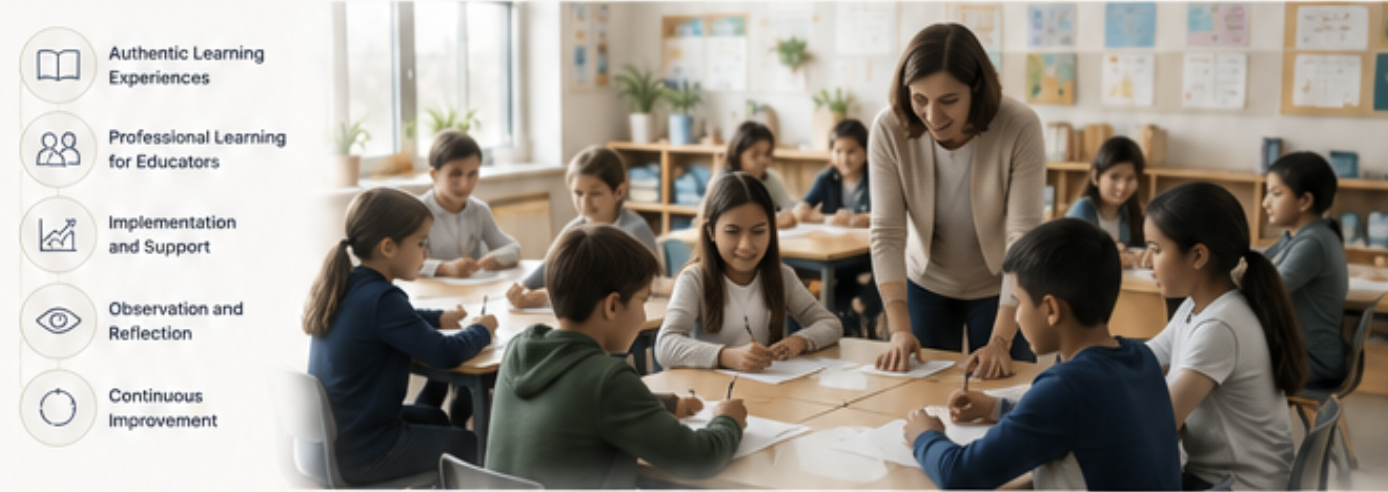
Educational Innovation exists only when research changes learning.
Educational Innovation is not the production of material.
It is the transformation of evidence into better educational decisions.
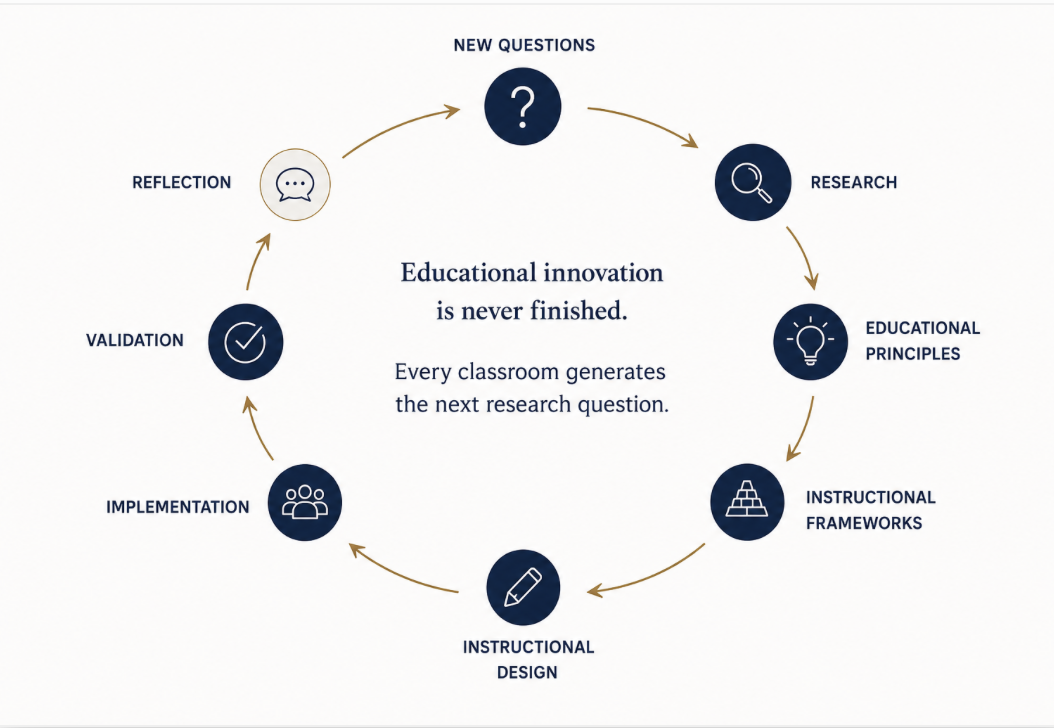

Better questions. Better design. Better learning.
We partner with schools and districts to transform complex educational challenges into evidence informed strategies that improve outcomes for every learner.
KNOWLEDGE LIBRARY
A Living Archive of Educational Innovation
Educational Innovation generates many forms of knowledge.
At LAJAM, we document research findings, institutional decisions, conceptual reflections, and educational frameworks so the entire process of innovations remains transparent and accesible.

EXPLORE OUR COLLECTION
Each collection offers a different window into how we investigate, decide, and build educational innovation.
OUR COLLECTION
Publications
FORMAL RESEARCH OUTPUTS
Working papers, research reports, frameworks, journal articles, books, and other publications that advance educational knowledge.
FOUNDATIONAL WORK
Don't Be a Master Teacher, Create a Master Classroom
Laura Morales
Published prior to the establishment of LAJAM, this work introduced many of the educational ideas that later informed the institute's research agenda.
This section will grow as LAJAM's research programme progresses through peer-reviewed publications, working papers, educational frameworks, and research reports.Decision Logs
DOCUMENTED INSTITUTIONAL DECISIONS
A chronological record of the of the educational decisions we make and the reasoning, evidence, and principles behind each one.
LATEST ENTRIES
003 Why We Chose to Build an Institute Instead of Another Curriculum Company
Institutional Reflections
IDEAS THAT SHAPE OUR RESEARCH AGENDA
Essays, questions and observations that guide out thinking and influence the direction of our research over time.
LATEST REFLECTIONS
001 What Educational Problem Kept Resurfacing Until an Institute Became the Logical Response?
002 If educational research generates knowledge, who transforms that knowledge into educational innovation?
003 Why Another Educational Research Institute?
Research Resources
SUPPORTING MATERIALS
Pilot reports, validation studies, presentations, posters, bibliographies, and other supporting documents.
WHAT YOU´LL FIND
Pilot and Validation Reports
Presentation Slides
Research Posters
Bibliographies
Additional Resources.